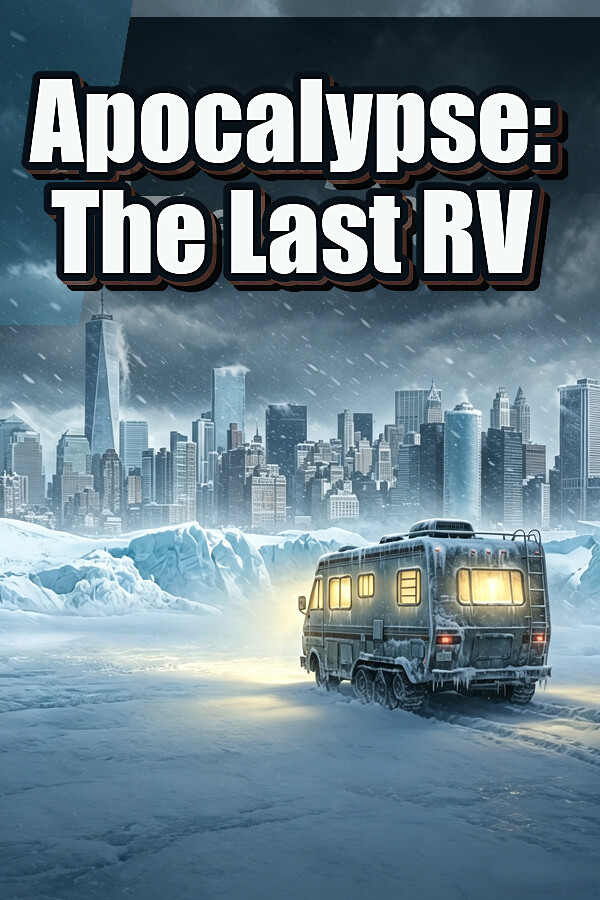
末世:我有一辆房车
Apocalypse: The Last RV — About This Game
Reborn Seven Days Before the Apocalypse. This Time, You Prepare.
Seven days.
That is how long you have before the world ends.
In your previous life, you were caught completely unprepared.
Food disappeared from the shelves.
Power grids collapsed.
The temperature kept falling.
People you trusted turned on you.
And in the end, everything you had was taken from you.
Then you wake up.
Seven days before it all begins.
This time, you already know what is coming.
So instead of panicking after civilization collapses, you do the sensible thing:
Make money. Buy supplies. Empty warehouses. Upgrade an RV. Prepare for everything.
When the apocalypse finally arrives, you will not be searching trash cans for your next meal.
You will already be on the road.
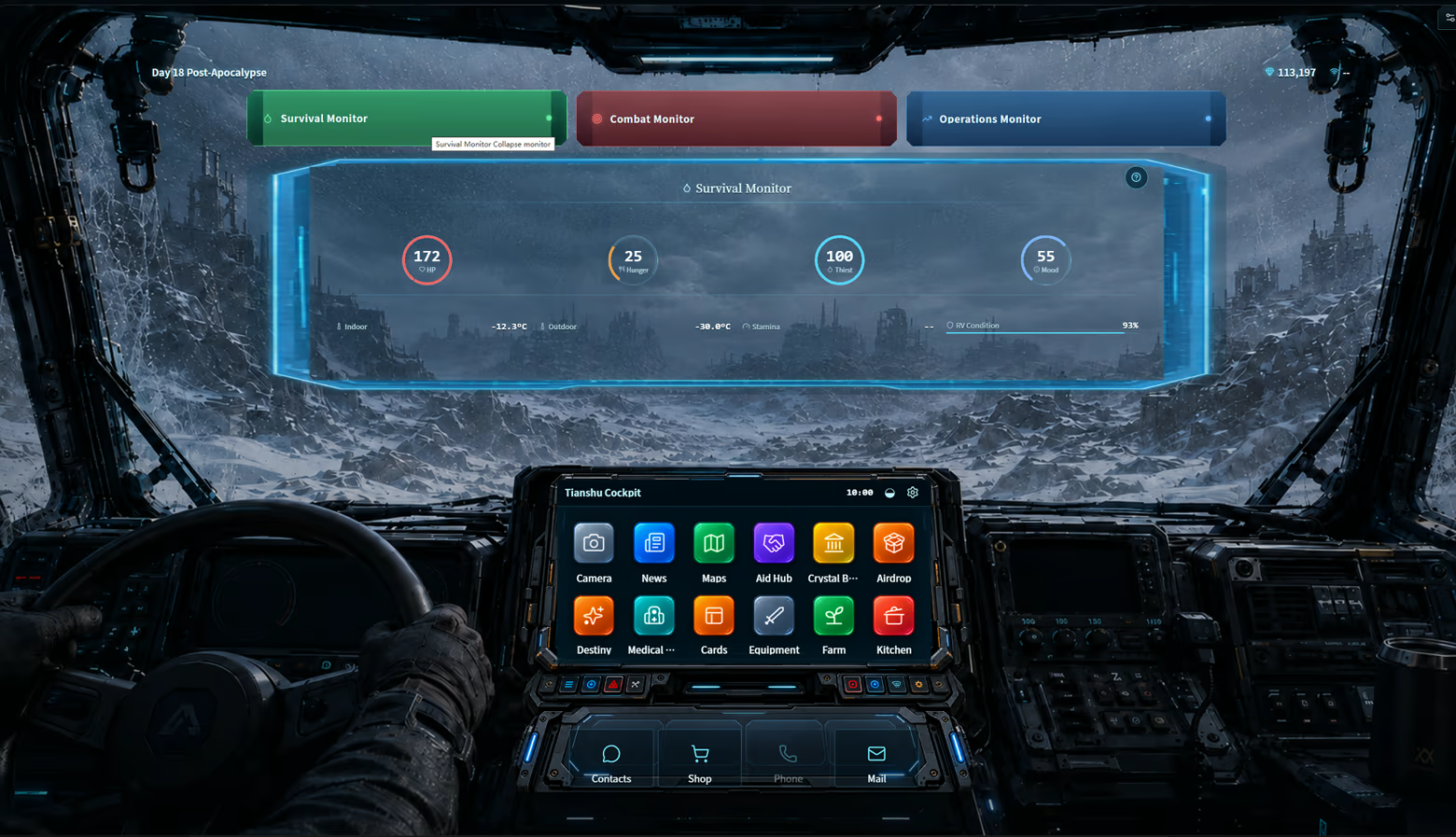
🚐 Turn an RV Into Your Home at the End of the World
Your RV is more than transportation.
It is your shelter, warehouse, workshop, kitchen, farm, command center — and eventually, a self-sufficient mobile fortress.
Stock it with food, water, medicine, fuel, tools and equipment before the disaster begins.
Then continue expanding it after the old world falls apart.
Upgrade its systems.
Increase storage capacity.
Unlock new facilities.
Assign survivors to different jobs.
Manage food, power, temperature and supplies.
Grow crops.
Raise livestock.
Fish.
Cook proper meals.
Craft equipment.
And slowly transform a battered vehicle into a place where people can actually live.
Outside, the world is freezing.
Inside, there is light, food and warmth.
That contrast is the core fantasy of Apocalypse: The Last RV.
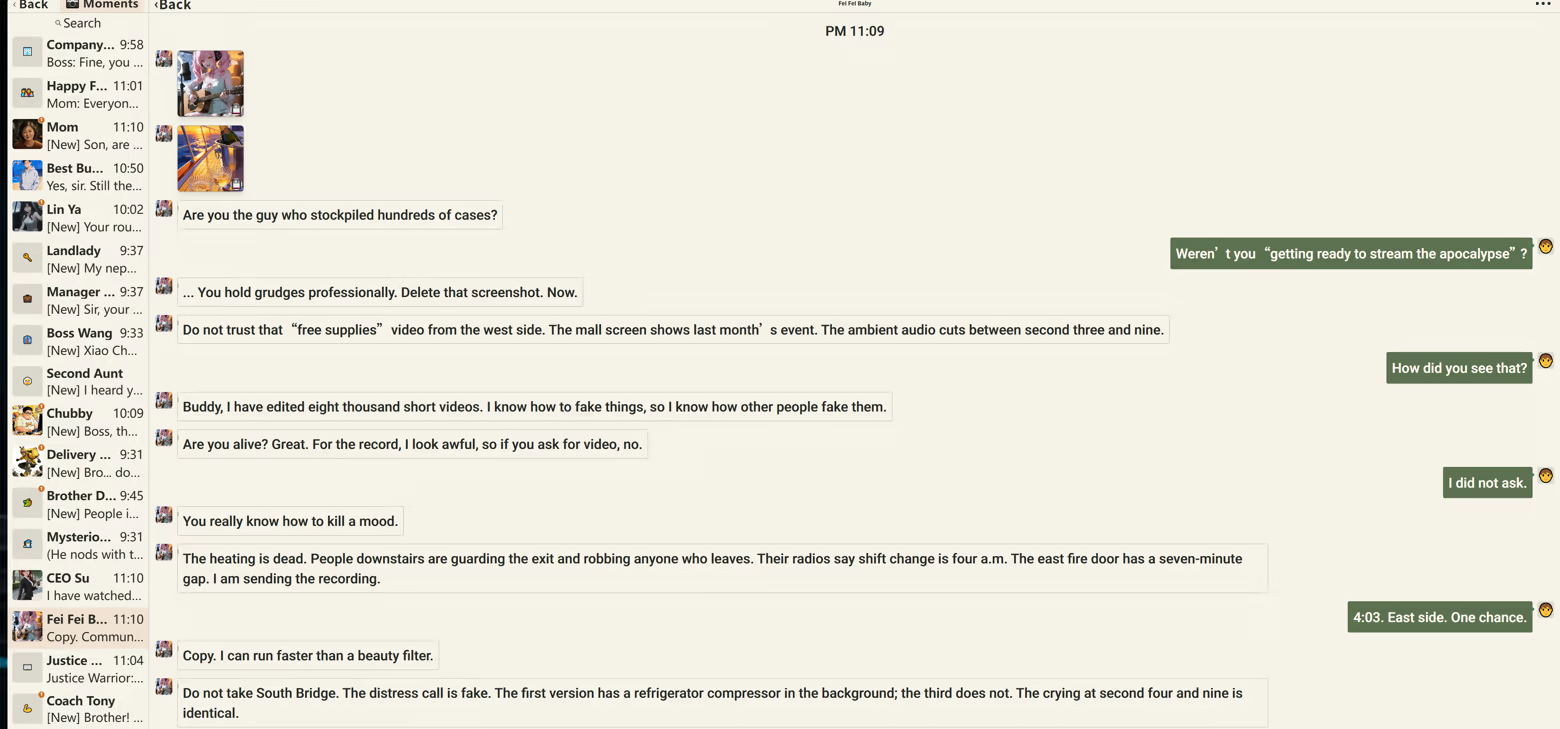
📦 Hoarding Is Not a Side Activity. It Is the Plan.
Most survival games begin after everything has already gone wrong.
This one begins before it happens.
You know exactly what is coming, so preparation becomes part of the game.
Use the seven days before the apocalypse to gather money, secure resources and decide what matters most.
Food?
Medicine?
Fuel?
Weapons?
Tools?
Luxury goods?
Seeds?
Construction materials?
Every decision determines what kind of life you will have once society collapses.
You cannot prepare for everything.
But you can prepare far better than everyone else.
And when the world begins to run out of basic necessities, the things you hoarded before the disaster become your greatest advantage.
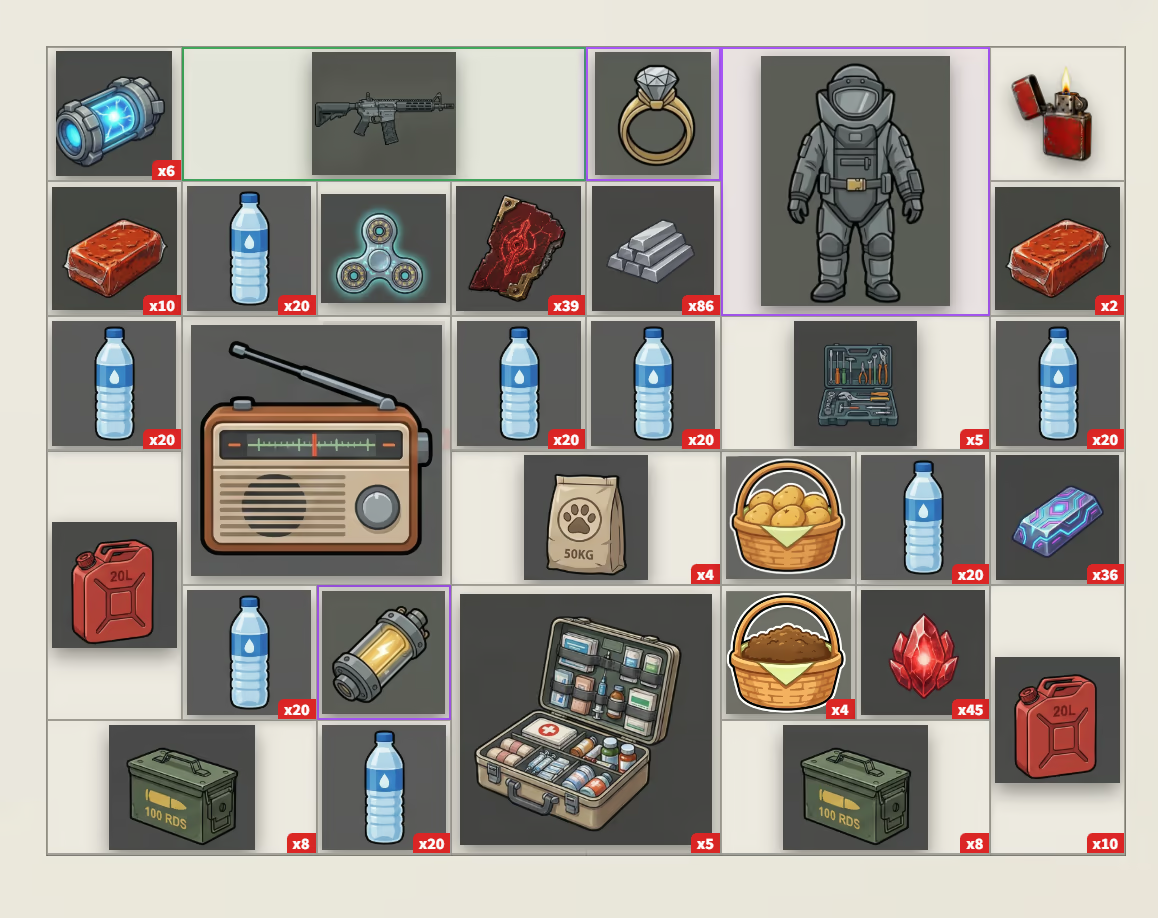
🥶 Survive the Apocalypse — Without Living Miserably
The apocalypse does not have to mean eating rotten canned food in a dark basement.
If you prepared well enough, survival can look very different.
While other survivors fight over scraps, you can:
cook proper meals,
maintain a warm living space,
grow fresh food,
keep livestock,
upgrade your RV,
collect rare supplies,
build relationships,
and continue moving through the wasteland.
The game is built around a simple question:
If you knew the apocalypse was coming, how comfortable could you make your life afterward?
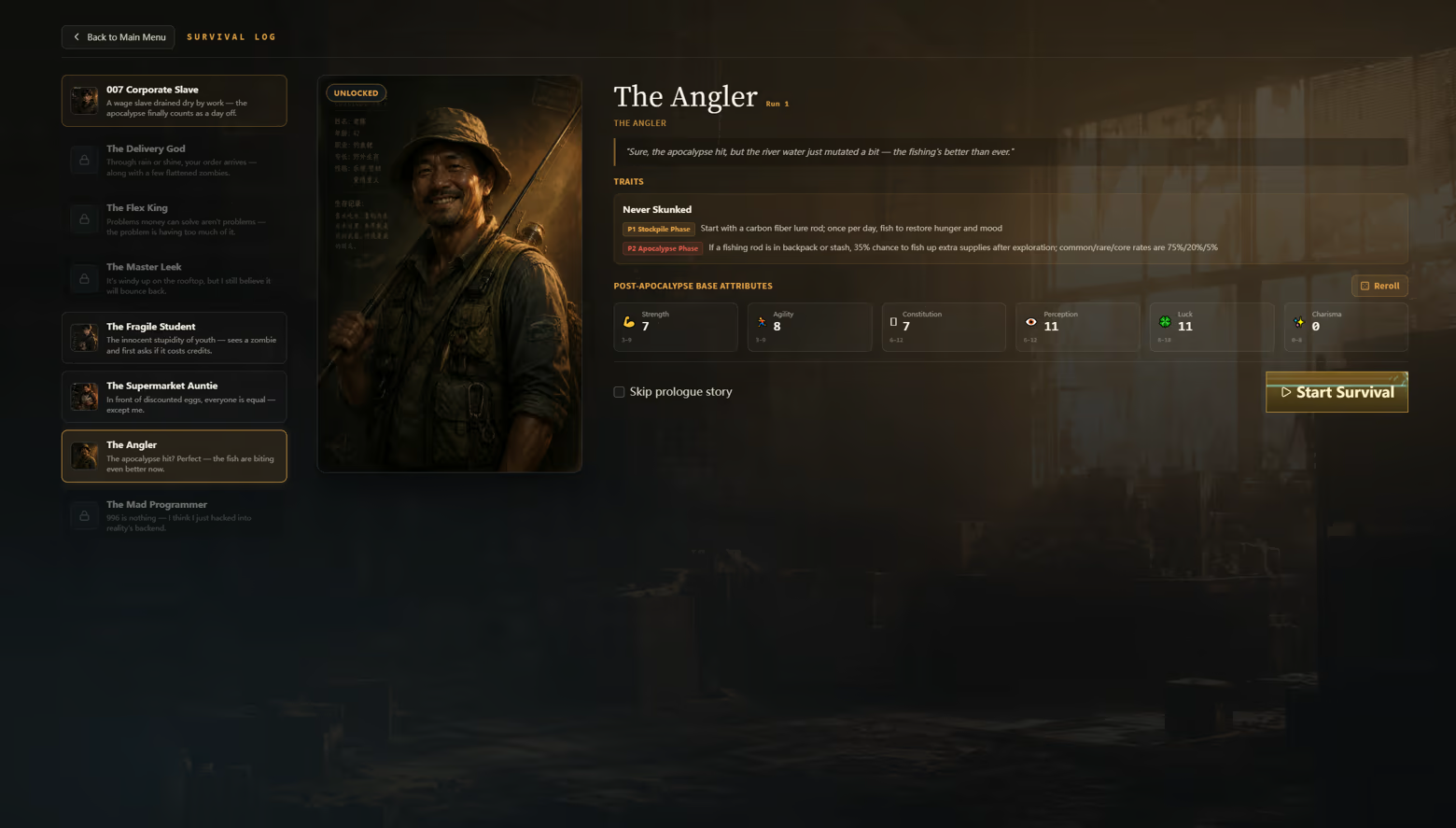
⚔️ Explore the Wasteland and Fight for What You Still Need
Even the best preparation cannot solve everything.
You will still need to leave the safety of your RV.
Explore ruined locations.
Search abandoned buildings.
Encounter survivors.
Discover events.
Fight infected creatures and dangerous enemies.
Recover equipment, resources and information that cannot be obtained anywhere else.
Combat uses a card-based system built around character abilities, equipment and deck construction.
Different survivors bring different strengths.
Different equipment creates different tactical options.
And the further you travel, the more dangerous the wasteland becomes.
You do not need to fight every battle.
But sometimes the things you need are waiting on the other side of one.
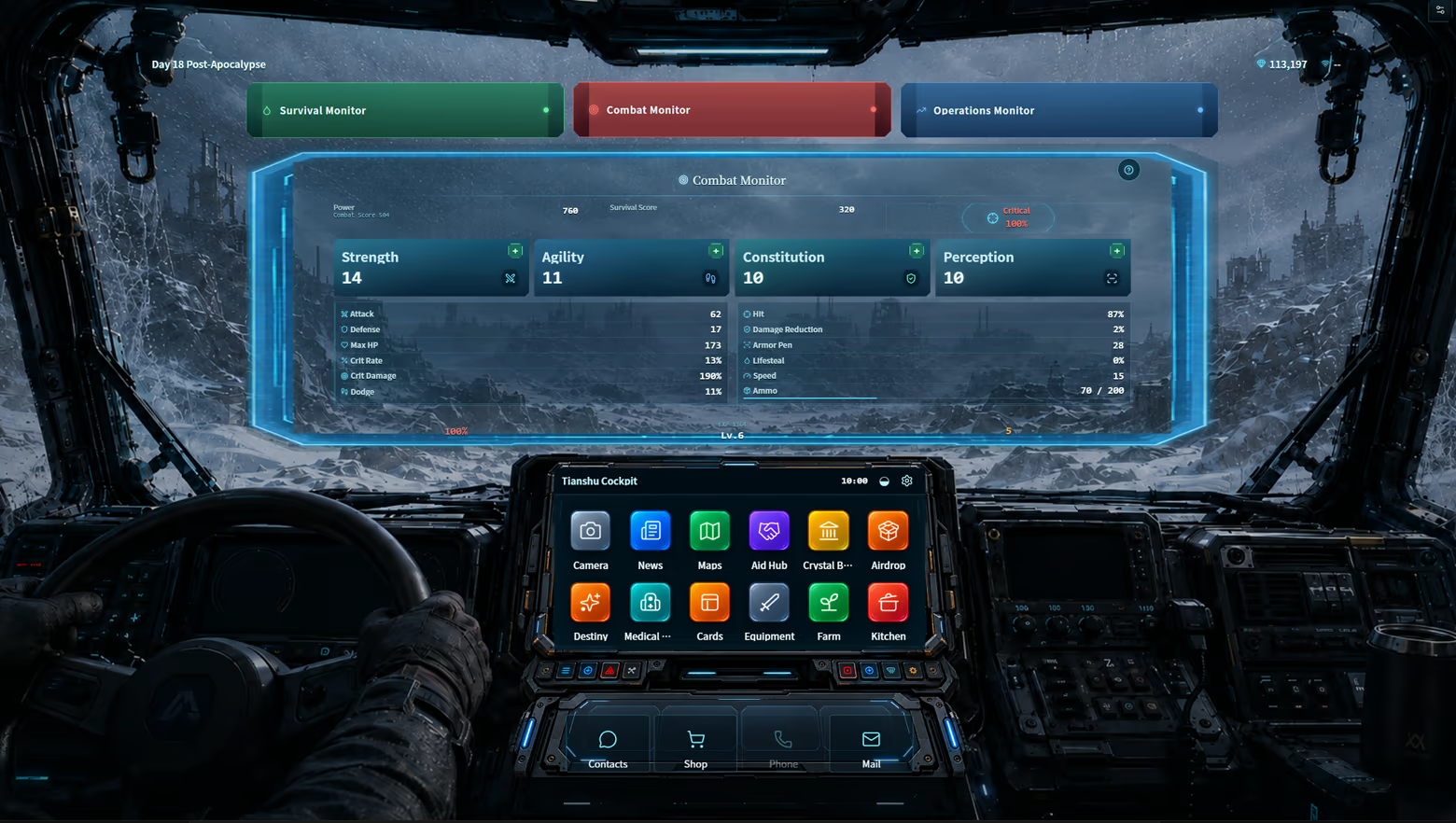
🃏 Build Your Own Combat Setup
Combat is not based on a fixed character skill bar.
Your deck is shaped by:
character abilities,
equipped gear,
faction cards,
passive effects,
status interactions,
and your overall build.
Experiment with different combinations.
Build around damage, defense, control, resource generation or synergy between survivors.
As your equipment and team change, your available strategies change with them.
Preparation matters before combat just as much as decisions made during combat.
🛣️ Break Through the Highway
The road itself is not safe.
Highway Breakthrough encounters push your RV and team into more direct survival situations as you attempt to move through dangerous routes and blocked areas.
Enemies, environmental hazards and resource pressure can turn what looks like a simple journey into a fight to keep moving.
Your RV is your home.
Losing control of the road means putting everything inside it at risk.
👥 Recruit Survivors and Build a Crew
You are not the only person who survived.
Throughout the game, you will encounter people with different backgrounds, abilities, personalities and motivations.
Some can become valuable crew members.
Some bring trouble.
Some have history with you.
Some may not be trustworthy at all.
Recruit survivors and assign them to different responsibilities:
guarding,
medicine,
repairs,
farming,
cooking,
scouting,
crafting,
command,
and more.
A survivor is not just another stat block.
Many characters are tied directly into the story, relationships and events that unfold around the RV.
❤️ Relationships, Romance and Old Grudges
The apocalypse does not erase the past.
Your former relationships, betrayals, friendships and unfinished business follow you into the new world.
V3.2 significantly expands the narrative side of the game with rewritten story sequences, stronger character arcs, dramatic reversals, romance and multiple relationship routes.
People who once looked down on you may eventually need your help.
People who betrayed you may return.
Old friends may become the people you rely on most.
New companions may become something more.
How these relationships develop depends on the choices you make and the way you treat the people around you.
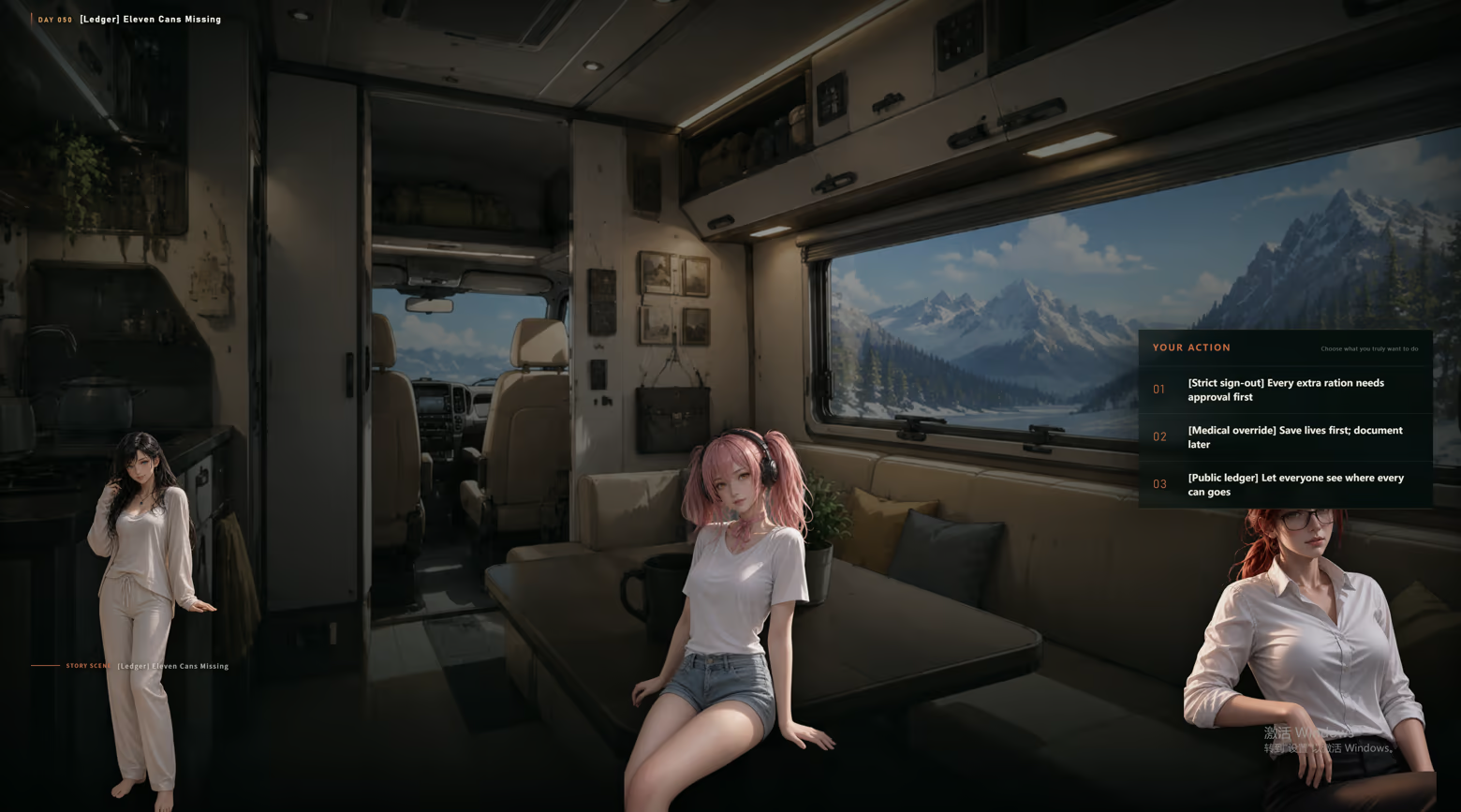
📖 A Chinese Apocalypse Web-Novel Fantasy You Can Actually Play
Apocalypse: The Last RV is heavily inspired by Chinese apocalypse and reincarnation web novels.
If you are familiar with that style of story, you will recognize many of its favorite fantasies:
returning to the past with future knowledge,
preparing before everyone else,
large-scale stockpiling,
becoming absurdly overprepared,
dramatic reversals,
revenge,
former enemies asking for help,
complicated relationships,
romance,
and watching the people who ignored the warning signs realize that you were right.
The game does not try to hide that influence.
It embraces it.
V3.2 introduces a new full-screen Visual Novel presentation system, rewritten narrative sequences, new CGs and cinematic scenes, and a stronger connection between story events and the rest of the game.
🌱 Farm, Raise Animals, Fish and Cook
Survival is not only about combat.
Your RV can become the center of a small mobile economy.
Grow crops.
Manage seeds.
Raise animals.
Fish for food.
Process ingredients.
Cook meals.
Maintain long-term supplies.
Different resources serve different purposes, and the further you progress, the more your RV becomes capable of supporting itself.
A successful run is not just about surviving another day.
It is about reaching the point where survival itself becomes manageable.
🔧 Craft, Upgrade and Expand
The wasteland is full of things that can still be useful.
Collect materials.
Craft equipment.
Improve existing systems.
Upgrade your RV.
Expand production.
Strengthen combat capabilities.
Increase efficiency.
Every system contributes to the same long-term goal:
turning limited resources into a stable life on the road.
🔁 Roguelite Progression and Reincarnation
Failure does not necessarily mean losing everything.
The game includes long-term progression systems that allow knowledge and certain advantages to carry forward between runs.
Each attempt can help you understand the world better, unlock new possibilities and prepare more effectively the next time around.
The apocalypse remains dangerous.
But you do not have to face it as the same person every time.
🛠️ Steam Workshop and No-Code Mod Creation
Want to add your own stories to the wasteland?
The game includes Steam Workshop support and built-in creation tools designed to make modding accessible without requiring programming experience.
Depending on the content type, creators can build custom material such as:
characters,
dialogue,
story events,
cards,
items,
social content,
and other data-driven game content.
Create your own additions, publish them through Steam Workshop and share them with other players.
The goal is to make the world expandable not only by the developer, but by the community as well.
🌍 Now Available in English and Simplified Chinese
The Steam version currently supports:
English
Simplified Chinese
V3.2 introduced a major English localization update alongside extensive UI and presentation changes.
Localization quality will continue to be improved throughout Early Access based on player feedback.
💻 Built for PC — and Still Being Rebuilt Around PC Players
The game originally began as a mobile project.
Bringing it to Steam exposed a lot of problems.
Some interfaces still felt too much like a mobile game.
Some systems were not explained clearly enough.
The original PC presentation did not communicate the fantasy of living inside an RV strongly enough.
And the initial Steam launch had more bugs and rough edges than it should have.
V3.2 is the largest rebuild the Steam version has received so far.
It includes major changes to:
the RV cockpit and central console,
PC UI layout and presentation,
story presentation,
Visual Novel sequences,
CGs and cinematics,
localization,
combat,
cards,
RV management,
progression,
and a large number of smaller usability and stability issues.
The PC version will continue to evolve throughout Early Access.
⚠️ What Kind of Game Is This?
Apocalypse: The Last RV is not a traditional open-world 3D survival crafting game.
It is a story-heavy survival management game built around:
preparation,
resource management,
RV development,
card-based combat,
exploration,
character relationships,
visual-novel storytelling,
farming and production,
and long-term progression.
If you enjoy survival games because you like managing systems, planning ahead, building up resources and watching a struggling shelter slowly become comfortable, this is the kind of experience the game is designed around.
☕ A Note From the Developer
Hi.
I'm the solo developer behind Apocalypse: The Last RV.
Programmer, designer, writer, UI designer, and usually the person fixing whatever broke five minutes ago.
I have always loved apocalypse stories.
But I kept noticing something.
A lot of survival games are built around suffering.
You start with nothing.
You are hungry.
You are freezing.
You search bushes for food.
You spend twenty minutes looking for one useful item.
Then you die somewhere miserable.
And I kept thinking:
What if I knew the apocalypse was coming?
Why would I wait until everything collapsed before preparing?
Why would I start with an empty backpack?
Why would I not borrow, earn or spend every cent I could, fill warehouses with supplies, buy everything people would soon be fighting over, and build myself a home that could keep moving?
And if I actually prepared properly...
why should surviving the end of the world still feel miserable?
Sometimes I want danger.
Sometimes I want difficult decisions.
But sometimes I also want a warm RV, a stocked refrigerator, a good meal and the satisfaction of knowing:
I prepared for this.
That is the fantasy this game is built around.
The Steam version is a one-time purchase with no advertising.
The game is currently in Early Access, and I will continue fixing, improving and expanding it based on player feedback.
I hope this strange little RV can become a comfortable place for you too.
— Lightyear Slicing Studio